
 Landlord Products / Services
It was Benjamin Franklin that famously said,
in this world nothing can be said to be certain, except death and taxes.
Unfortunately, never a truer word has been spoken.
Before delving into the morbid world of BTL & Landlord taxes, I need to shuffle through the customary disclaimers:
- I’m not a professional tax accountant or legal professional, I’m a simple landlord blogger, so that means my ramblings should NOT be relied upon as legal or financial advice.
Whilst I’ve prepared the information on the website with care and have made every attempt to ensure that the information at the time of publication is accurate, this information shouldn’t be relied upon as a substitute for formal/professional advice. I mostly speak through experience of being a landlord of almost a decade.
You’ve been warned!
- I’m based in England, as are my BTL’s, and since England share the same taxation rules as Wales, that means most of the finer details on this page will only be applicable to landlords in England & Wales. However, the general rules and principles are typically relevant to the whole of the UK.
Page contents
- Paying Tax On Rental Income
- Income Tax Rates for Landlords
- Completing your property/landlord tax return
- Should I use a professional property tax accountant?
- How to calculate your accounts/profits
- Do you still need to file a tax return if you’re not making any profit from your rental property?
- Landlord expenses that are tax deductible
- What about mortgages? Can I offset my mortgage payments?
- How to avoid paying tax on Rental Income
- How to reduce & minimise landlord running costs
Paying Tax On Rental Income- do I need to pay?
To put simply, being a landlord is a business, so that means any profit made is subject to taxation. Yup, sorry!
This can work in two ways…
- Most landlords will be subject to income tax; that means they’ll need to file a Self Assessment tax return form for each tax year. For more information, I recommend visiting the official GOV website.
- Many professional and ‘portfolio landlords’ operate their BTL empire through a incorporated company (because it can be more tax efficient), and they’ll be subject to business taxation rules, which is a whole different and messy ball game – one that I’m unbelievably unqualified to share any useful information on.
Since most of the landlords that are operating their portfolio under a company will be a ‘professional landlord’ and have their own accountants crunching the numbers, the information on this page will be catering for the part-time and average landlord who will need to complete a Self Assessment tax return.
Income Tax Rates for Landlords
Even though I’ve titled this section “Income Tax Rates for Landlords”, the “for landlords” part is irrelevant, because landlords are subject to the same income tax rates as everyone else.
For most of us, being a landlord is a ‘part-time’ job; we usually have a full-time job, which is how we earn the majority of our income. Your rental income should be added to any other sources of income, and that total will determine which tax bracket you go crashing into.
Here are the Income Tax rates and bands on the day of writing this (last updated: June 2025):
| Band | Taxable income | Tax rate |
|---|---|---|
| Personal Allowance | Up to £12,570 | 0% |
| Basic rate | £12,571 to £50,270 | 20% |
| Higher rate | £50,271 to £125,140 | 40% |
| Additional rate | over £125,140 | 45% |
For the latest rates, you may want to hop over to this page on the GOV website.
Completing your property/landlord tax return
Word of warning, you should inform HM Revenue and Customs (HMRC) as soon as you start letting a property, even if you’re not making any money.
For the last couple of years, HMRC have been vocal about clamping down on landlords that have been failing to declare their rental gains.
If you’re concerned that owe tax from previous years, then you should contact HMRC directly– their website says that a confession entitles you to leniency.
Ensure to refer to the self-assessment tax return property notes prior to completing your return, as it provides useful details on how to complete the property pages of your tax return. It also provides a simple checklist of expenses to consider when preparing your return.
Self-assessment UK property notes (links to GOV website).
Making Tax Digital (MTD) – New Tax Compliance system for Landlords coming in 2026
From 6th April 2026, the Making Tax Digital system will be launched.
The simplest explanation of Making Tax Digital is that the tax system in the UK is moving away from paper tax returns and instead wants to make it compulsory for individuals and businesses to submit income and expense data digitally.
So that means, qualifying landlords will need to send quarterly updates and a final year-end statement to HMRC using MTD-compliant software.
As per the Gov’s MTD Guide:
You’ll need to use Making Tax Digital for Income Tax if all of the following apply:
- you’re a sole trader or a landlord registered for Self Assessment
- you get income from self-employment or property, or both
- your qualifying income is more than £20,000
When you need to start using Making Tax Digital for Income Tax depends on your qualifying income within a tax year. If your qualifying income is over:
- £50,000 for the 2024 to 2025 tax year, you will need to use it from 6 April 2026
- £30,000 for the 2025 to 2026 tax year, you will need to use it from 6 April 2027
- £20,000 for the 2026 to 2027 tax year
Here’s a full guide on Making Tax Digital for Landlords and how to comply.
Should I use a professional property tax accountant?
I am a firm advocate of obtaining professional advice when needed.
If anyone is in doubt as to whether they could benefit from professional advice then go and see a professional to ask them what value they could add to your business. Many tax accountants provide free initial consultations and will be able to advise clients of ways to mitigate their tax exposure and plan for the future that they would not otherwise have known.
Dan Niedlie, Founder of Tax Policy Associates Ltd, advises against using unregulated tax services, and recommends using CIOT and/or ATT qualified accountants or lawyers for tax advice.
The safest approach is to only instruct an ICAEW-regulated accounting firm or an SRA-regulated law firm.
I can only agree.

Source: original tweet
How to calculate your accounts/profits
Income and expenses from property are assessed as a ‘single letting’ business, so whether you let one or multiple properties, you’re taxed on the overall net profit from all properties, as opposed to individual property.
This is relatively easy to work out:
- 1] Add together all your rental income (for ALL let properties)
- 2] Add together all your expenses income
- 3] Subtract your expenses away from your income
Note, the ‘tax year’ runs from 6th April to 5th April the following year. So, your total income and expenses should be calculated between those dates.
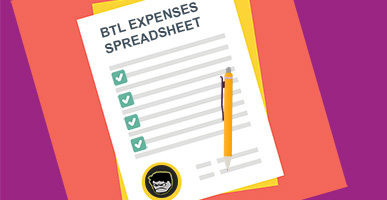
To help keep track of your rental income and expenses, you may want to use this rudimentary (but arguably useful) Landlord Expenses Spreadsheet template I threw together.
Do you still need to file a tax return if you’re not making any profit from your rental property?
Yes.
It’s quite common to make a loss when renting your property, particularly in the current climate and at the early stages of letting.
Many landlords invest in property as a long-term investment, and they largely rely on house prices increasing, which typically doesn’t happen until years after the initial purchase.
However, even if you’re making a loss, or very little profit (which keeps you below the taxable threshold), you should still complete a Self Assessment tax return!
Landlord expenses that are tax deductible
The ongoing running costs of being a landlord can be excruciating, but fortunately many of those expenses are tax deductible (i.e. ‘allowable expenses’), which means they can help crush your tax liability. Who doesn’t want a bit of that action?
Here’s a list of ‘allowable expenses’ as listed on the GOV website:
- Letting agents’ fees
- Costs of services, including the wages of gardeners and cleaners
- Legal fees e.g. tenant eviction costs
- Accountants’ fees
- Buildings and contents insurance
- *Maintenance and repairs to the property (but not improvements)
- Utility bills, like gas, water and electricity
- Rent, ground rent, service charges for leasehold properties
- Council Tax
- Other direct costs of letting the property, like phone calls, stationery and advertising to find tenants
*Allowable expenses don’t include ‘capital expenditure’ – like buying a property or renovating it beyond repairs for wear and tear.
Here are a couple more expenses that I’ve offset against my income:
- Rent Insurance
- Any expenses related to landlord regulations, including Gas Safety Certificates/checks, EPC’s, Smoke & Carbon Monoxide Alarms etc.
- Landlord Software
- Eviction services
- Tools & materials required to assist with maintenance & repairs.
- Replacing/fixing furniture and white goods.
On a side note, many landlords benefited from a ‘10% wear and tear tax allowance’ (which you may have heard of)- unfortunately that has been abolished.
- Cleaning services e.g. professional end of tenancy cleaning services and regular HMO cleaning services.
Save all your receipts and account for every single penny spent on your rental properties, even tiny items like a pack of nails. Every penny adds up and can lower tax bands.
You can hop over to this post for a more complete list of deductible expenses for landlords (which includes a checklist).
What about mortgages? Can I offset my mortgage interest payments?
Ahh, you noticed – I didn’t add it the list of “allowable expenses”
Yup, you noted correctly, and it’s a bit of a sore subject for many landlords, as interest on loans used to be fully tax deductible (as it still is with every other type of business)! But I’ll side-step the politics, and focus on what you need to know…
‘Section 24‘, an amendment to the UK tax code, was introduced in April 2017. This restricted landlords’ from being able to deduct any “finance costs” from their taxable rental income, which includes interest paid on loans e.g. mortgages.
However, landlords can claim a 20% relief (tax-credit) on interest payments for mortgages.
More details available on my Section 24 blog post and this page over at the GOV website.
How to avoid paying tax on rental income
If you plan on making a profit, you can’t, and you shouldn’t.
I find it alarming when landlords look into completely avoiding paying tax in their rental income.
Assuming you’re above the minimal taxable threshold, the best you can do is minimise the amount of tax you pay. If you’re looking to completely avoid paying tax, you’re mostly creeping into ‘tax evasion’ territory, which by definition is “the illegal non-payment or underpayment of tax.”
How to reduce & minimise landlord running costs
While taking advantage of every “allowable expense” is crucial to maximising profits, it’s even more important to keep the overall running costs of a BTL down in the first place.
Spending less by being a savvy consumer (not to be confused with being careless and cheap!!!) coupled with offsetting as many expenses is the key to maximising profits.
For an ultimate guide on how to keep costs down, I would recommend heading over to the Best Ways For Landlords To Cut Costs & Save Money article.
Disclaimer: I'm just a landlord blogger; I'm 100% not qualified to give legal or financial advice. I'm a doofus. Any information I share is my unqualified opinion, and should never be construed as professional legal or financial advice. You should definitely get advice from a qualified professional for any legal or financial matters. For more information, please read my full disclaimer.
![List Of Tax Deductible Expenses For Landlords [Checklist]](https://www.propertyinvestmentproject.co.uk/wp-content/uploads/Landlord-Deductible-Expenses.jpg "List Of Tax Deductible Expenses For Landlords [Checklist]")