

 Landlord Products / Services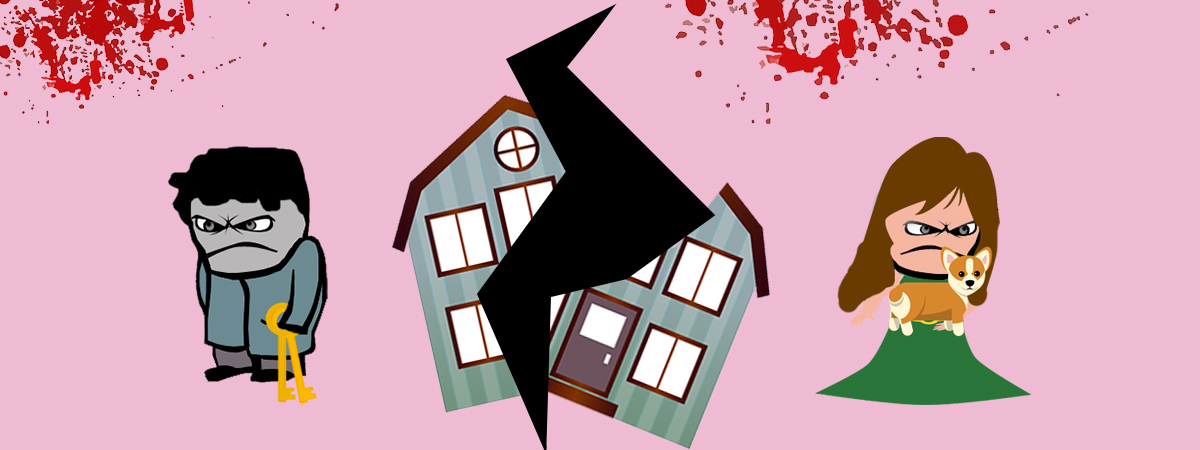
Damnit!
Looks like my tenants have become another statistic. They’ve only gone and broken up from their long-term relationship! Urgh, why do catastrophic things always happen to me (good people)?
I received the phone call last week; my tenant (the male counterpart) did the honours of informing me that his relationship (with the co-tenant) has gone down the swanny, and consequently their living arrangements had changed.
*gulp*
Like any warm blooded animal, my immediate reaction was to offer my condolences and unleash a flurry of the all cliché platitudes. But the pit of my stomach was doing somersaults, freaking out about the current and future state of the tenancy, and what a pickle I’ve been potentially left with. Selfish much?
Anyways, so now what happens? Well now I’m going to make lemonade out of lemons by using the opportunity to craft a blog post (you could say their marriage going to shit was a blessing in disguise in some ways – I’ve been struggling with writer’s blogger’s block), covering the following:
- What the landlord’s legal rights are when tenants break up
- What happens to the tenancy agreement when couples break up
- What I decided to do when my tenants broke up and changed their living arrangements
Table of Contents
- Check the Tenancy Agreement to Understand Your Legal Position
- Who Is Responsible for Paying Rent After a Tenant Breakup?
- Common Scenarios When Tenants Break Up
- What Happens to the Tenancy Deposit After a Breakup?
- Can Landlords End a Tenancy Early After Tenants Separate?
- What Did I Decide to Do After My Tenants Separated?
Check the Tenancy Agreement to Understand Your Legal Position
First and foremost, check the details of the tenancy — particularly whether the agreement is a sole tenancy or a joint tenancy.
In other words, is one person named as the sole tenant in the tenancy agreement (making the other occupant a “permitted occupier”), or are both occupants named tenants?
If you have a sole tenancy agreement, then the named tenant is generally responsible for paying the rent and complying with all other obligations under the agreement.
If it is a joint tenancy, there will usually be a joint and several liability clause. This means both tenants are legally responsible for the tenancy obligations, including paying the full rent if necessary.
Many tenancy agreements include wording similar to the following:
1.13 Unless otherwise expressly provided, the obligations and liabilities of the parties under this agreement are joint and several.
For example, my tenancy agreements contain a clause similar to the above.
In my case, the tenants were on a joint tenancy agreement.
Who Is Responsible for Paying Rent After a Tenant Breakup?
In short, it depends.
If the tenancy agreement is in one person’s name only, that tenant remains legally responsible for paying the rent and complying with the tenancy obligations, even if they decide to move out of the property.
If the tenancy agreement is joint, and unless the agreement specifically states otherwise, all named tenants are usually jointly and severally liable. This means each tenant remains legally responsible for the full rent and tenancy obligations, even if one of them vacates the property following the breakup.
Common Scenarios When Tenants Break Up
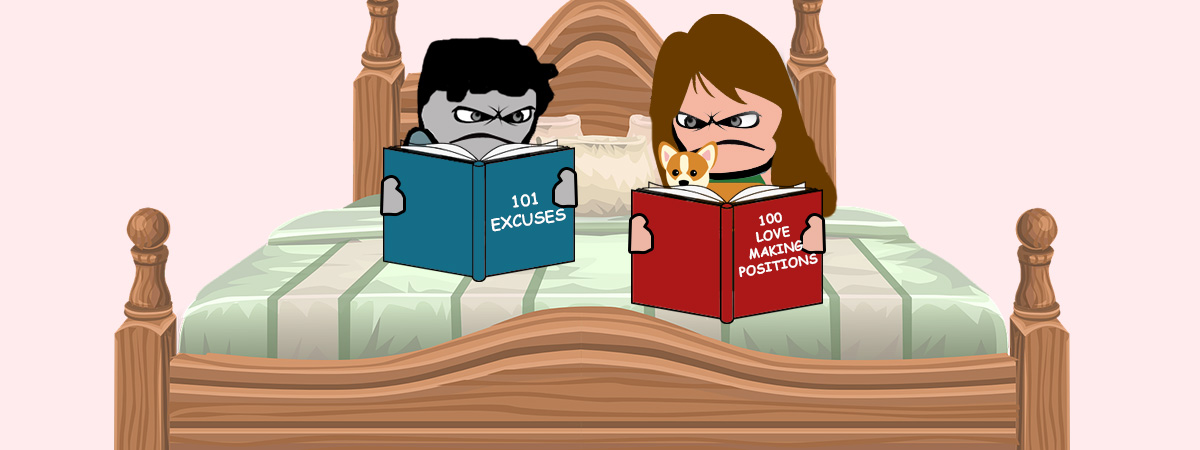
1) One Tenant Wants to Leave While the Other Remains
Presuming you’re happy for one tenant to remain and become the sole tenant, there are two options:
- The cleanest option is to mutually “surrender” the existing tenancy, and then start a new sole tenancy with the remaining tenant.
- Issue an addendum to the existing tenancy agreement that clearly documents the change in circumstances, including the departing tenant’s name, the new sole tenant and the date it takes effect. All parties should sign the document.
2) Both Tenants Want to Leave and End the Tenancy
Realistically, there is often very little a landlord can do in this situation if both tenants are committed to leaving.
Under the Renters’ Rights Act in England, tenants are able to end a tenancy by providing the required notice period (typically a minimum of two months’ notice, depending on the circumstances and tenancy terms).
3) Both Tenants Want to Stay but Not With Each Other
This is a difficult situation, and there is rarely a straightforward solution.
Landlords generally cannot enforce an eviction or resolve a personal dispute between tenants on these grounds alone, so a practical decision needs to be made about how to proceed based on the tenancy structure and overall circumstances.
Any outcome will usually depend on what the tenants can agree between themselves, as the landlord is not in a position to adjudicate personal conflict.
What Happens to the Tenancy Deposit After a Breakup?
If both tenants vacate and the tenancy is terminated, then the normal end of tenancy procedure should be followed – return the deposit (minus any claims).
If one tenant is going to remain, while the other moves out (after serving a notice to quit), then that can be considerably trickier.
If the outgoing tenant contributed to the original deposit and would like their portion back, then according to Shelter, there are two options:
- The landlord agrees to give their position back (which ultimately means the deposit becomes less, unless the remaining tenant tops it back up)
- Ask the remaining tenant to refund the outgoing tenant’s share of the deposit
Neither solution makes it sound like the outgoing tenant is entitled to get it back, but rather it’s possible if someone is willing to play ball.
The reason I’m referencing Shelter’s viewpoint is not only because are they a reputable source of information, but also because they tend to be very pro-tenant leaning, so I find it quite telling that they seem to be suggesting that it’s potentially tough-titties for outgoing tenants in this situation, and with very little recourse. Make of that what you will.
Either way, I think what’s most important is for the landlord NOT to mishandle the deposit and consequently being put in a position where any future claims are put into jeopardy, so I actually recommend either contacting the deposit scheme where the deposit is protected for clarification on how to properly manage the deposit in the given situation, and/or find guidance on their website on how to manage a change of sharer/tenant mid-tenancy (they’re bound to have guidance on the matter somewhere).
Can Landlords End a Tenancy Early After Tenants Separate?
No. At least, not simply because the tenants have had a relationship breakdown.
A relationship breakdown, on its own, does not give a landlord any legal grounds to end a tenancy.
In practice, there is also usually no valid reason to seek eviction solely on this basis. Tenants still have the same legal rights and protections regardless of their personal circumstances.
Unless the tenants breach the terms of the tenancy, for example, by falling into rent arrears or another contractual obligation – they remain entitled to occupy the property until the tenancy is lawfully ended.
For more information, here is an in-depth blog post on how to end a tenancy and the different options available.
What Did I Decide to Do After My Tenants Separated?
So, to clarify, I don’t think there’s any one size fits all response to the situation, so mine shouldn’t be used as a default template.
I think the best path to take (for all parties) really depends on several factors, including what the tenants’ themselves want to do (and how that may impact the household income Vs rent), their track record as tenants, and what the landlord/tenant relationship is like.
In my case, I was fortunate that despite their domestic issues, they were model tenants throughout the tenure (which was approx. 14 months at this point). I’m sure whatever it is they were going through didn’t just happen overnight, but rather several months of turmoil, and during that time they upheld all their obligations.
Eddie (a random alias I’ve assigned to one half of the duo) informed me that he had already vacated the property 6+ weeks’ prior to notifying me of the situation, while Dorothy (a random alias I’ve assigned to his wife) remained living there. That’s how they wanted the situation to remain going forward (which led me to believe that the “let’s see if we can fix this” phase failed), so they made the request to renew the tenancy with Dorothy being the sole tenant.
I had no problem with that, to be honest, because as said, they’ve been model tenants, and I really didn’t have any reason not to trust either of them.
After the initial phone call (which, to be frank, completely blind-sided me), I got in touch with Dorothy just to ensure she was okay, and to confirm that I was happy for her to remain the sole tenant.
Update: 11 years later (2026), Dorothy remains the sole occupant and hasn’t missed a single payment – she remains a model tenant. Absolutely incredible.
I haven’t spoken to Eddie since he broke the news to me over the phone, so I have no idea what his situation is. Funny enough, I did spot him out in public a year or so after the incident. Naturally, I scurried off into the opposite direction, hoping to avoid an awkward encounter at all costs.
Are you a landlord or tenant going through this ordeal? Drop a comment and share your experience or feel free to ask any questions…
Landlord out xo
Disclaimer: I'm just a landlord blogger; I'm 100% not qualified to give legal or financial advice. I'm a doofus. Any information I share is my unqualified opinion, and should never be construed as professional legal or financial advice. You should definitely get advice from a qualified professional for any legal or financial matters. For more information, please read my full disclaimer.























Either he will move back in or she will be gone within the year (assuming there are no kids).