
 Landlord Products / Services
Page contents
What is a Tenancy Deposit?
Landlords are entitled to request a deposit from tenants to cover any unforeseen costs that may arise, such as damage to the property or rent arrears. The landlord can use the deposit to cover these costs. However, it is important to note that landlords cannot claim compensation for any damage that constitutes wear & tear, for example carpets wearing out.
Bear in mind that the longer a tenant remains in occupation, the more natural wear will occur.
Do Landlords Have to Take a Tenancy Deposit?
Nope, it is not a legal requirement.
When it comes to deposits, landlords can choose one of the following options at the start of a tenancy:
- Don’t take a security deposit
- Take a security deposit (and secure it into a tenancy deposit scheme)
- Sign up to a No Deposit scheme – this is a new’ish initiative, whereby the landlord takes no deposit, but the tenant pays for a guarantee via a “No deposit” scheme, which protects their landlord for 6 – 12 weeks’ worth of rent.
If you do not take a deposit, the rest of the blog post will not apply to you. However, if you take a deposit from a tenant, no matter how small, you are legally required to protect it in a tenancy deposit scheme.
How Much Tenancy Deposit Can Landlords Charge?
Since the introduction of the “Tenant Fees Act 2019” on the 1st June 2019, landlords in England are capped at taking no more than five weeks’ rent for the tenancy deposit where the annual rent is less than £50,000.
For example, if the rent is £1,400pcm, the calculation to determine the maximum deposit you can take is:
**1400 (rent pcm) x 12 (months) = £16,800
16,800 (annual rent) ÷ 52 (weeks) = £323.08
323.08 (weekly rent) x 5 (maximum weeks) = £1,615.38
There is six weeks’ rent cap where the total annual rent is £50,000 or above.
**Please note, the calculation is an example based on a one year tenancy and for demonstration purposes only. You should seek guidance from the deposit scheme you choose to secure your deposit with to assist in calculating the maximum amount you can request.
Protect Your Position: Inventory and Schedule of Condition
It is always important to prepare a thorough property inventory whether you take a deposit or not. An inventory is a report which records the condition of the property/items before a tenant moves in and just before a tenant leaves, so it can be made clear what damages, if any, need to be paid for out of the deposit.
Both landlord and tenant should prepare the inventory together, so the condition of the property and all items are agreed upon. Here is a more detailed article on how to prepare a property inventory.
Tenancy Deposit Protection Rules for Landlords
Section 184 of the Localism Act 2011 covers the Tenancy Deposit Scheme Legislation.
The Tenancy Deposit Scheme Legislation was introduced to ensure that deposits are handled fairly. If the tenant meets the terms of the tenancy agreement, the full deposit should be returned. It also allows landlords to use the deposit to cover any damage or loss of rent caused by the tenant. If any disputes arise, an alternative dispute resolution service is available to help resolve them quickly.
Here’s an overview of what is required for landlords to comply:
- Applies to: This tenancy deposit legislation applies to every landlord in England who has taken a deposit from a tenant under an Assured Shorthold Tenancy (AST) or Assured Periodic Tenancy (APT).
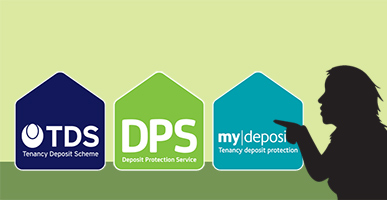
- Securing the deposit: The deposit must be protected into one of three government-backed tenancy deposit schemes within 30 days of receiving it.
The deposit scheme will hold the deposit and release it at the end of a tenancy.
But don’t take my word for it, you should read and rely on the official legislation, Section 213 of the Housing Act 2004, to keep up to date – that will be fun for you, I’m sure!
Serving the Prescribed Information
The deposit must be protected with in 30 days of receiving the deposit (this may not necessarily be the same date as when the tenancy starts), the tenant must also be served prescribed information within 30 days [of also receiving the deposit], which includes:
- Address of the rented property
- The amount taken for the deposit
- Which deposit scheme was used to protect the deposit
- The contact details of the tenancy deposit scheme used and its dispute resolution deposit
- The name and contact details of any third party that’s paid the deposit e.g. Letting Agent
- How to apply to get the deposit back
- What to do if there is a dispute over the deposit
Serving the prescribed information is NOT merely a procedure, it is a legal requirement. Securing the tenancy alone is not enough. It has also been advised by a Solicitor to get tenants to sign a document to confirm that they have actually received the information.
Here is a more detailed article on what to do after you have secured your tenants deposit & prescribed information.
Handling Deposits Paid in Part or by Instalments
Firstly, I would personally recommend that landlords do NOT accept deposits in parts or instalments. However, if this is the case, the Landlord Law blog explains how this can be managed:
- The rules do not change just because you have not got the whole deposit sum, you still NEED to secure what you have received with in 30 days.
- It seems like the only way you can accept partial deposits is either if:
- You are prepared to pay the full amount yourself, and then get repaid by the tenant
- MyDeposits say that, “Any change to the amount of the Protected Deposit will require the original Deposit to be Un-Protected and a new Protection to be purchased.” – so essentially you will need to un-protect the partial amount paid, and then re-protect the new amount. It’s a lot of admin work, and they charge an admin fee every time, between £17.50- £30.
Basically, you still need to protect the deposit if you receive it in instalments. To be safe, you should also re-serve all the prescribed information to the tenant each time a payment is received.
For this reason, it is generally better not to accept tenants who are unable to pay the full deposit upfront.
When to Return Deposits to Tenants
If an agreement is reached on how the deposit should be returned, the deposit scheme will return the deposit, divided in the way agreed by both parties.
The deposit must be returned to the tenant within 10 days once it is agreed on how much should be returned.
If there is a dispute, the scheme will hold the deposit until the dispute resolution service or courts decide what is fair.
It is important to notify the deposit scheme immediately if there are any disputes. This is where the property inventory will become extremely useful, and that’s why it is always important to prepare one.
What Happens If I Don’t Protect My Tenant’s Deposit?
Protecting tenancy deposits is a legal requirement. Failing to protect the deposit and/or provide the prescribed information to the tenant within 30 days of receiving it can have the following consequences:
- The tenant may claim a penalty of up to three times the deposit amount, in addition to the return of the deposit.
- The tenant may have a defence to a claim for rent arrears, as they can ask the court to offset any penalty awarded against any outstanding debt.
- In the event that you need to evict your tenant and require a court order, the court will not grant a possession order if you have failed to protect the tenant’s deposit in a government-approved tenancy deposit scheme.
For information on what to do if you haven’t complied with the deposit legislation, you may want to hop over to my I haven’t protected my tenant’s deposit blog post.
Disclaimer: I'm just a landlord blogger; I'm 100% not qualified to give legal or financial advice. I'm a doofus. Any information I share is my unqualified opinion, and should never be construed as professional legal or financial advice. You should definitely get advice from a qualified professional for any legal or financial matters. For more information, please read my full disclaimer.