

 Landlord Products / Services
It’s the moment of truth!
The final end of tenancy inspection is the time when landlords cross their fingers and hope their property has been returned in the same condition as when it was handed over to their tenants at the beginning of the tenancy. Oh, how we can dream!
I’ve been a landlord for several years now, which means I’ve watched dozens of tenants come and go, so I’ve been through my fair share of final inspections. I’ve had a mixed bag of results: some tenants went above and beyond by returning the property in better condition, some did exactly what they needed to, no more, no less, and a small handful of filthy cretins left the place in a complete shambles.
As soon as your tenant(s) vacate the property and the deposit is returned, it’s extremely difficult to claim back any damages you notice after, so conducting a thorough final inspection is critical!
Introduction to End Of Tenancy Inspections
Conducting inspections, whether it be a routine mid-tenancy or end of tenancy inspection, is a learning curve for most self-managing landlords.
Every inspection is different simply because humans have different behavioural patterns and hygiene standards, so landlords can never be certain of what they’re walking into during one. Even when you think you have all the check-points covered, a tenant will come along and show you something newly terrifying.
Inexperience is a liability at the best of times, but it’s especially so during final inspections. My inexperience has cost me plenty over the years (I’ll share a prime example of how after I cover my end of tenancy checklist). But obviously, we learn from our mistakes and the best we can do is ensure we don’t get caught out by the same traps again.
If you have an inventory condition report that was conducted at beginning of the tenancy, this it’s time to shine as this is what it is created for – to cross reference the condition of the property from the start of the tenancy to the end.
If you don’t have an inventory report, I can only recommend arranging one for next time. Without one, it’s going to be extremely difficult to deduct any money from the security deposit to cover any damage, even if you have a legitimate case.
My ‘End of tenancy’ inspection checklist
Plumbing
- Drains– run the taps from all water outlets in the house for several minutes to ensure there are no overspills from the drains. It’s also worth removing the drain covers and ensuring there are no obvious and visible blockages.
- Taps– check that all taps actually work, and water flows as it should. Don’t neglect outside/garden taps.
- Plug holes– I once had a tenant that left a disgusting amount of matted hair down the shower and sink plugholes. Apparently he malted like a husky in the summer. What a super freak. It was disgusting and could have easily caused blockages. Ensure the plug-holes are thoroughly cleaned by your tenant; it’s certainly not our job to unpick cheesy bunches of matted hair from plug-holes, or from any other type of hole, for that matter.
- Water pressure / flow– if there are any pipes blocked, it may have an impact on the water flow. So check that the pressure and flow from all taps are as should be. Blocked pipes commonly occur from abusive substances being wrongly disposed of down the sink. If that’s the case, the responsibility should fall onto the tenant.
Electrics
- White goods / Electrical Items– don’t rely on visual inspections, ensure that each item is tested and in full working order. Pay particular attention to the cleanliness of the items, especially the white goods. I got royally penetrated up the rectum recently by my dirtbag tenant that was too lazy and disgusting to clean the oven during his entire tenancy. I didn’t check INSIDE the oven during the final inspection, but when I did a few days later, I was in for a nasty shock in the form of congealed fat and food residue that resembled decayed bird shit. I had to hire a professional oven cleaning company to resolve the matter. Moral of the story: don’t underestimate the filthiness of tenants. Oh, and thoroughly check all appliances, inside and out.
- Appliances– as with the above point, check all appliances you provided with the property, don’t rely on appearances, and especially don’t rely on your tenant’s word.
- Plug points– check to see that all plug points are working. Additionally, check that the plastic plug socket covers aren’t broken/cracked. Plug socket covers often get broken when furniture is being moved around and/or when crazy sex stunts go wrong- it’s a pretty common issue. Not a huge financial burden, but nevertheless the deposit is there to cover those mishaps.
- Light Switches– ensure all light switches work, and again, check that the actual switches are in the condition they should be in.
- Door bell– check to see if the doorbell works. A lot of landlords generally forget about this one.
- Fire / Smoke Alarms– check that all fire alarms still work. That’s a no-brainer, and should be covered in the inventory.
Fittings
- Doors– ensure all doors open, close and lock properly. It’s also worth looking for significant cracks/splits in the doors, especially where the lock is. Doors are expensive to replace.
- Windows– ensure all windows open, close and lock. Also look for for any chips and/or cracks.
- Laminate / hardwood flooring– if you have laminate/hardwood flooring, check for breaks, chips and unevenness. I had to replace hardwood flooring once because the previous tenant liked hosting gatherings which entailed a lot of fluid spillage (I’m not judging). Of course, that caused the floor panels to expand and dislodge. It cost quite a bit to fix, and I didn’t spot it during the inspection because the damage was being strategically covered by furniture. Yes, my thoughts precisely, what a sneaky, snakeoil, conniving little cock!
- Sinks / baths/ showers – check all ceramic and plastic fittings for cracks and chips. I had a tenant leave behind a huge crack inside a sink before.
Storage
- Outside/Inside Bins– always check that the bins are completely empty. It should be the tenants responsibility to dispose of all rubbish before they vacate the property. I’ve fallen victim to this ugly, ugly, ugly situation before, and it killed a part of me, a good part. My tenant left an ungodly amount of crap in the wheelie bins outside the property. Of course, I didn’t check the bins during the final inspection. Worst part was that the rubbish wasn’t disposed into black bags, it was just thrown directly into the bins. Seriously, are we back in the caveman era where we act like animals? Let’s just shit in the corner while we Willy-nilly dispose of rubbish directly into wheelie bins. To clear up the mess I had to retrieve my thick, rubber gloves from my special trunk and transfer the rubbish into black bin bags. By the end of it, I had 8 bags full, which I had to take to the local dump. It was an awful experience, which still gives me nightmares. Why didn’t I just let the garbage men collect the rubbish, you ask? Because while the property was empty, I applied for council tax exemption so I was revoked from my local tax privileges e.g. garbage collection. Is that a good enough reason for you? Lovely.
- Cupboards / Drawers– again, make sure cupboards and drawers are completely empty, otherwise the new tenants will only make you do it. And believe me, it’s not a fun job to dispose of other peoples shit (unless you’re getting paid for it).
- Shed / Garage– ensure all items from outbuildings are removed. Also worth checking the fittings in the outbuildings e.g. doors, windows, locks.
- Loft / Atic– check the loft/actic is empty and doesn’t contain any of the tenants unwanted items. Tenants have tried to pull this stunt on me one too many times. Amusing, but it gets old and boring.
Furniture
- Underneath / behind– the amount of times I’ve had tenants try and strategically place furniture in an attempt to cover up shit stains on the carpet is horrifying. Check around, under, behind, on top, and inside of the furniture, basically every which way possible.
- Testing– give each furniture piece a test of stability and usability e.g. lay down on the beds and sit down on the sofas. Make sure everything feels safe and sturdy.
- Unwanted furniture removed– tenants often buy temporary furniture with the intentions of leaving them behind when it’s time to vacate because they’re too lazy to dispose of their cheap Ikea crap. The tenant may suggest leaving the items in the property for your new tenants, and it may seem like a tempting offer. However, I ALWAYS refuse the offer because as soon as a landlord starts providing tenants with pieces of furniture, they automatically become liable for repairing/removing/replacing the item if it gets damaged (unless there’s a disclaimer in the contract). Make tenants remove ALL their furniture if you don’t want to provide a part/furnished property.
Security / Alarms
- Alarm– check the alarm is still working, specifically the sensors.
- Unlock key– check that the intruder switch is still operable and the unlock key for it is present.
- Alarm code– check that the original alarm code is still the same (i.e. the tenants didn’t change it).
I’ve make my checklist available for download at the bottom of the page – please go ahead and use it as a template and adapt it your needs.
Inspections has a learning curve and is an evolving task
I remember during one of my very first final inspections’ I made the fatal mistake of forgetting to check inside the oven *slaps forehead*
To be honest, it didn’t even occur to me to poke my tiny little stupid head inside the oven to see what condition it was left in. It was only during a viewing [for new tenants] that I, fortunately, noticed how horrendously FILTHY the appliance was left in. Thankfully, while I was trying to keep my composure while vomiting in my mouth, the prospective tenants didn’t notice the mess.
The oven was smothered in thick, greasy, asshole residue. It genuinely looked like the oven was used as a bird aviary, because the congealed gunk looked like bird shit. One thing is for certain, that mess did not happen over night, so I strongly suspect the oven hadn’t been cleaned once during the 3 year tenancy. Filthy!
Here are some pictures I took on my [low quality] camera-phone so you can get a rough idea of what I’m talking about. Although, these images really don’t do justice to how gross it was.
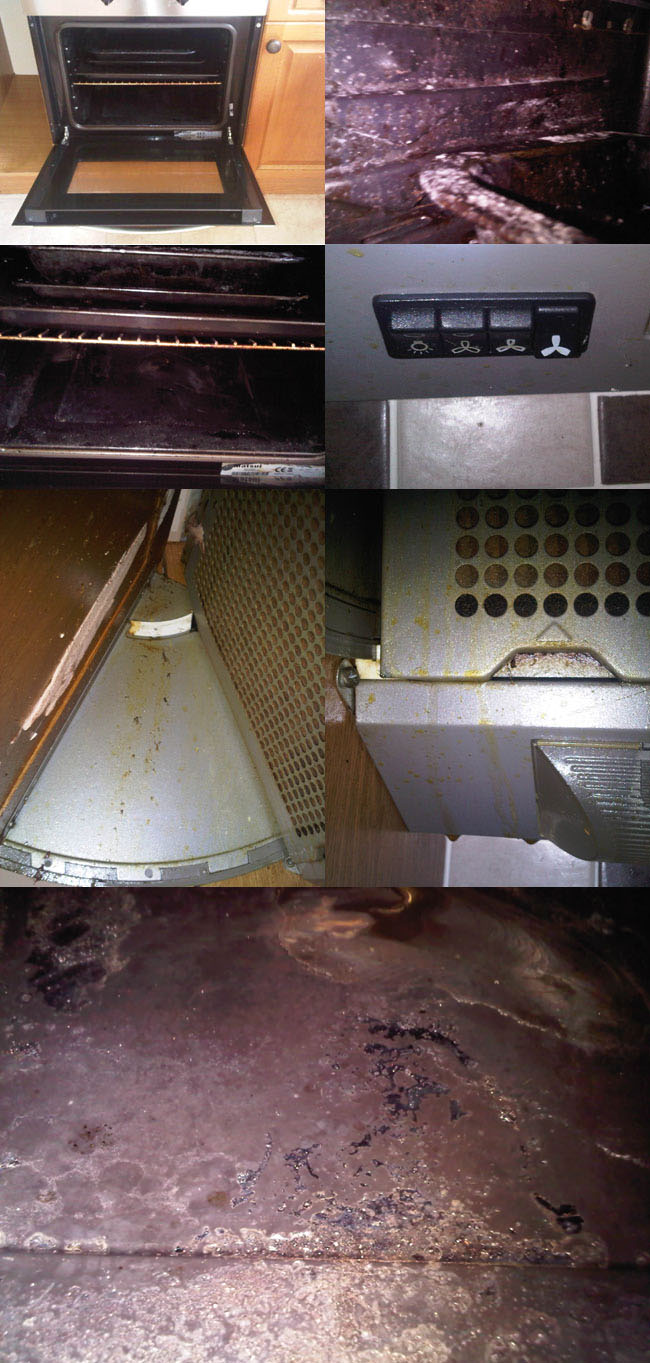
Would you really cook food in that? My tenants did. The thought of it literally makes me want to rip my stomach out through my throat and toss it in the river. I don’t want to eat ever again.
Anyways, the thick grease was so prominent that I had to hire a professional oven cleaning company to handle the situation. They came around, took the extractor hood and oven apart and got to work. The service cost £59.
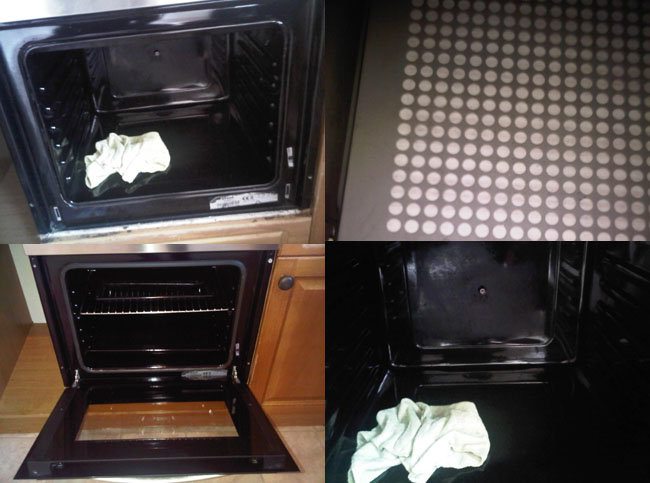
Lesson learned.
“Check inside oven” was officially stamped into my ‘end of tenancy’ inspection checklist.
As said, I learn from each experience, so my end of tenancy inspection checklist is constantly evolving.
FAQ – End of Tenancy Final Inspection
How clean should a property by at the end of the tenancy?
A tenant is obligated to return the property and all appliances in the same condition as they received it in (minus wear and tear).
Your inventory report (that should have been completed at the beginning of the tenancy) will help both landlord and tenant return the property in the right condition.
If you didn’t conduct an inventory, it could make matters extremely difficult if there are disputes over the condition of the property. Generally speaking, the burden of proof is on the landlord. I recommend trying to compromise, but be warned, you may have to make some concessions (the penalty for skipping the inventory. Consider it a lesson learned).
What if my property is not returned in a satisfactory condition after the final inspection?
Explain to your tenant what the problem(s) is, and give them an opportunity to resolve it.
If your tenant is in disagreement, and you have an inventory to back up your allegation, you can file your case with the tenancy deposit scheme in order to make a claim to use the deposit to resolve any outstanding issues.
When should the final end of tenancy inspection be done?
This can be a bit of juggling act, and often varies case by case. A couple of points to bear in mind:
- It’s best to conduct the final inspection after all your tenant’s possessions have either been nearly boxed or completely vacated from the property, and once the property has been properly cleaned. This will allow for a thorough inspection, particularly because it’s common for damage to be caused while moving furniture/items in and out of the property.
- Conducting the final inspection on move out day can create problems if any problems are flagged during the inspection, because it doesn’t provide the tenant an opportunity to resolve them.
- The best case scenario is to conduct the final inspection 2-3 days before move out day, with the property cleaned and emptied. But this isn’t always possible, and it largely depends on the tenant’s schedule and/or willingness to be organised.
Ultimately, communication is key; talk to your tenant to determine what makes most sense. In many cases, tenant’s start moving all their possessions out a few days before their last contracted day, which usually works out the best for everyone.
Does my tenant need be present during the final inspection?
Not necessarily, but it’s definitely recommended.
Is professional cleaning required at end of a tenancy?
Landlords cannot force tenants to pay for a professional end of tenancy cleaning service if they have returned the property in the same condition as they received it in.
However, if tenants do not return the property in that condition, landlords can be within their rights to use the deposit to hire a cleaning company.
Here’s a more complete guide on end of tenancy cleaning for landlords.
Disclaimer: I'm just a landlord blogger; I'm 100% not qualified to give legal or financial advice. I'm a doofus. Any information I share is my unqualified opinion, and should never be construed as professional legal or financial advice. You should definitely get advice from a qualified professional for any legal or financial matters. For more information, please read my full disclaimer.
Any documents you download from this website are just examples of its kind and should be checked by a professional. I give no warranties or representations concerning the documents, and accept no liability in relation to the use of the documents.










Hi Landlord,
Oven's are always a must when I check move outs, also fridge's and freezers (you'll be amazed the amount of times a single chicken breast has been left in a freezer that's been switched off).
Out of interest what company did you use for that oven?
Sparkling and at that price I think I may use it at home instead of using industrial cleaners which burn my eyes!