

 Landlord Products / Services
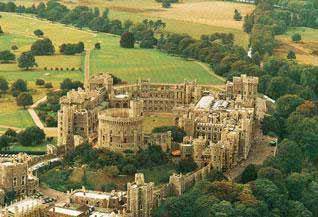
I recently discovered that the biggest house in the world is Windsor Castle, located in England, Berkshire.
The castle’s floor area is approximately 484,000 square feet (about 45,000 square metres). After centuries of alterations, the castle contains approximately 1,000 rooms and occupies 13 acres of land.
Who would have guessed?
I’ve visited the amazing building a few times on school trips when I was younger. I evidently didn’t pay any attention to the tour guide- but who does at that age? School trips were always about having a reason to escape the school grounds for the day and being able express ourselves in our hip, baggy clothes. That’s probably why I didn’t realise castles were considered as “houses”. I just thought castles were castles and houses were houses. I couldn’t have been more wrong.
The definition of “house”, according to dictionary.reference.com
a building in which people live; residence for human beings.
People live in castles, so it looks like a castle, by definition, is a “house”, and in that case, Windsor Castle is one mother of a house.
Introduction to Windsor Castle
Together with Buckingham Palace in London and Holyrood Palace in Edinburgh, Windsor Castle is one of the principal official residences of the British monarch.
Most of the Kings and Queens of England have had a direct influence on the construction and evolution of the castle, which has been their garrison fortress, home, official palace, and sometimes their prison. The castle’s history and that of the British monarchy are inextricably linked. Its rich history spans almost 1000 years.
Brief History of Windsor Castle
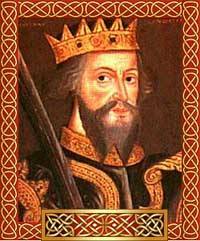 Windsor Castle was originally built by William the Conqueror, who reigned from 1066 until his death in 1087. The castle formed part of his defensive ring of castles surrounding London, the site chosen in part because of its easily defensible position. The building was basically a fortress, as opposed to a inhabitable residence.
His successor William II is thought to have improved and enlarged the structure, but the Conqueror’s youngest son King Henry I was the first sovereign to live within the castle. He was conscious about security, and thought it was the safest place for him and his family.
From then on, centuries passed and many great leaders took habitat in the fortress. Improvements were made, and slowly more and more buildings were added to the overall structure.
It is accepted that Edward III was the monarch who began the transformation of the castle from a fortress to a comfortable residence. However, Henry VIII’s successor and son, King Edward VI (who reigned between 1547 – 1553), wrote while staying in the castle “Methink I am in a prison, here are no galleries, nor no gardens to walk in.”
Edward VI’s sister Queen Elizabeth I (who reigned between 1558 – 1603) spent much of her time at Windsor and regarded it as the safest place in her realm and would retire here in moments of anxiety, as she described it: “knowing it could stand a siege if need be” While her statement suggests the castle was still very much a fortress, she too contributed to the transformation
The Restoration of the monarchy in 1660 was to prove the first period of significant change to Windsor Castle for many years. Charles II did much to restore and refurnish the castle from the damage suffered during the civil war.
Following the death of Charles II in 1685, the Castle fell slowly into a state of neglect. Needless to say, while the precincts and park remained a complex of inhabited royal mansions, the sovereigns themselves preferred to live elsewhere.
It was not until 1804, when King George III, the father of 13 children, needed a larger residence than could be found elsewhere – that the castle was once again fully inhabited.
It was during the reign of King George IV between 1820 – 1830 that the castle was to undergo the greatest single transformation in its history. George IV, known for his extravagant building at both Carlton House and the Royal Pavilion during his regency, now persuaded Parliament to vote him £300,000 for restoration. The architect Jeffry Wyatville was selected, and work commenced in 1824.
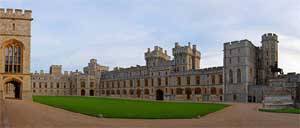
The work took 12 years to complete and included a complete remodelling of the Upper Ward, private apartments, Round Tower, and the exterior fa�ade of the South Wing which gave the castle its near symmetrical fa�ade seen from the Long Walk.
Wyatville was the first architect to view the castle as one composition, rather than a collection of buildings of various ages and in differing styles. As an architect he had a preference for imposing symmetry, whereas the castle which had evolved piecemeal over the previous centuries had no symmetry at all. Wyatville imposed a symmetry of sorts on the existing buildings of the Upper Ward, by raising the heights of certain towers to match others, and refacing the Upper Ward in a Gothic style complete with castelated battlements to match the medieval buildings.
Much of the interior of the Castle was given the same makeover treatment as the exterior. The work was unfinished at the time of George IV’s death in 1830, but was virtually completed by Wyatville’s death in 1840.
Following the accession of King Edward VII in 1901, the castle often remained empty for long periods, the new King preferring his other homes elsewhere. But then…
Who lives in Windsor Castle today?
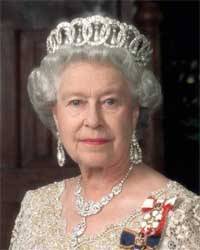 In 1952, Queen Elizabeth II came to the throne and decided to make Windsor her principal weekend retreat. The private apartments which had not been properly occupied since the era of Queen Mary were renovated and further modernised, and the Queen, Prince Philip and their (then) two children took up residence. This arrangement has continued to the present day.
Windsor Castle Layout
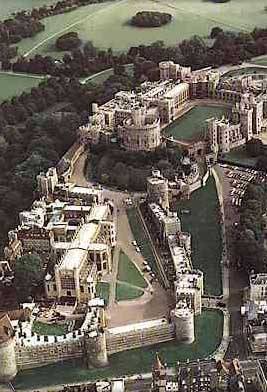
Over its 1,000-year history, the design of Windsor Castle has changed and evolved according to the times, tastes, requirements and finances of successive Monarchs. Nevertheless, the positions of the main features have remained largely fixed and the modern plan below is a useful guide to locations. The castle today, for example, remains centred on the motte or artificial hill (“A” on the plan) on which William the Conqueror built the first wooden castle.
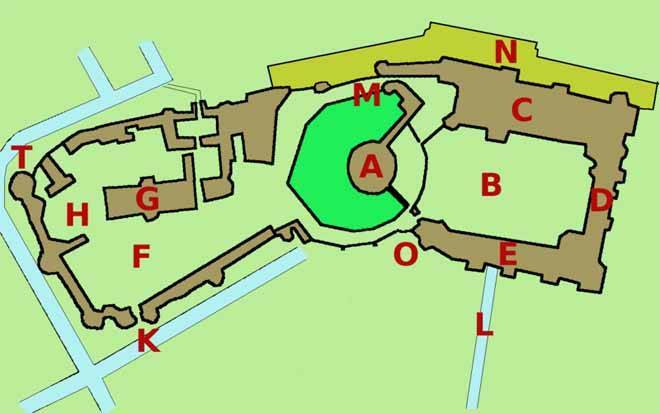
A: The round tower
B: The Upper Ward, The Quadrangle (as this courtyard is known)
C: The State Apartments
D: Private Apartments, overlooking the East terrace
E: South Wing, overlooking The Long Walk
F: Lower Ward
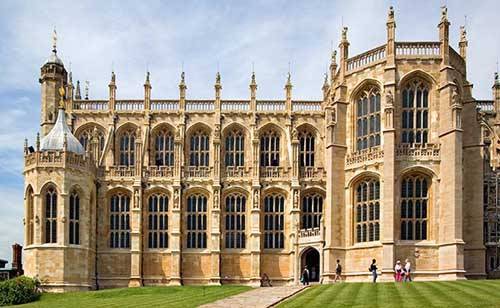
G: St George’s Chapel
H: Horseshoe Cloister
K: King Henry VIII Gate (principal entrance)
L: The Long Walk
M: Norman Gate
N: North Terrace
O: Edward III Tower
T: The Curfew Tower
Windsor Castle Quick Facts
- Windsor Castle is the English county of Berkshire
- Windsor Castle is the largest inhabited castle (house) in the world
- The Queen is often in residence at Windsor Castle and this is indicated by the Royal Standard flying over the Round Tower. When the Queen is not in residence the Union Jack flag flies in its place.
- The castle’s floor area is approximately 484,000 square feet (about 45,000 square metres)
- Most of the Kings and Queens of England have had a direct influence on the construction and evolution of the castle, which has been their garrison fortress, home, official palace, and sometimes their prison
- Windsor is the only royal castle that has been in continuous occupation since the Middle Ages
- Windsor was on of the first sites chosen by William the Conqueror for the series of fortifications built to protect his new conquest after 1066
- The majority of the castle was designed by an architect, Jeffry Wyatville in 1824. The work took 12 years to complete and included a complete remodeling of the Upper Ward, private apartments, Round Tower, and the exterior facade of the South Wing
- The early castle was almost certainly built of wood. It remained a wood and earth structure until King Henry I began to convert the castle to stone
- On 20 November 1992, a fire began in the Queen’s private chapel. The fire raged for 15 hours until it had destroyed nine of the principal state rooms. One-fifth of the floor space of the castle was damaged -an area of 9,000 square metres. The restoration programme was not complete until 1997; 70% of it funded by the decision to open to the public for the first time the state rooms of Buckingham Palace. The total cost of repairing the damage was £37 million. The restoration was undertaken at no additional cost to the British taxpayer.
- Windsor Castle is one of three official residences of The Queen and has been home to the Sovereign for over 900 years.
- The castle, after centuries of alterations, contains about 1,000 rooms and occupies 13 acres of land.
- Windsor castle contains many dungeons which were occupied by many famous prisoners. Some of the famous prisoners of Windsor Castle are as follows: 1265 – The Lord Mayor, called FitzThomas, 1346 – King John II of France and King David II of Scotland, 1413 – The Earl of March and Prince James (later James I) of Scotland, 1546 – The poet, the Earl of Surrey, 1647 – King Charles I.
- The original functions of Windsor Castle were to act as a royal power base, to overawe and frighten the indigenous population and to provide a retreat for the Royal family in times of civil disorder. It is now one of three a luxury residences to Queen Elizabeth II.
Windsor Castle Pictures
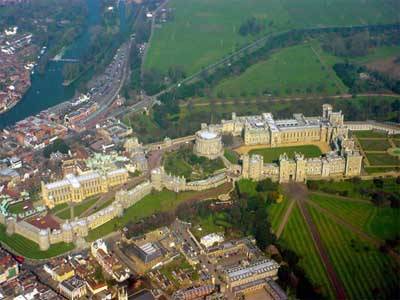
Windsor Castle Chapel
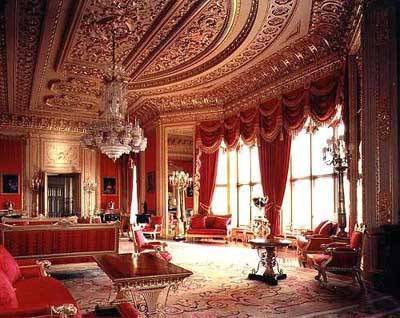
Windsor Castle Crimson Room
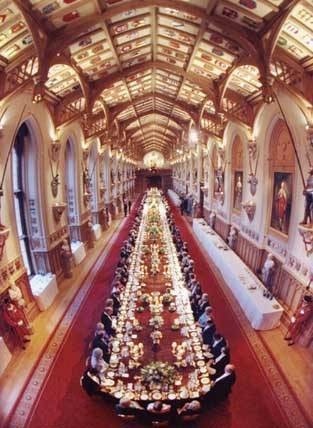
Windsor Castle Banqueting Room
Visit Windsor Castle
Windsor Castle is all year round to the general public, although opening arrangements may be subject to change at short notice. Visitors can see five main areas (subject to opening arrangements) on a visit to Windsor Castle: the State Apartments, St George’s Chapel, Queen Mary’s Dolls’ House, the Castle Exhibition and the exhibition in the Drawings Gallery. Between October and March, the semi-state rooms are also open to the public. For more information, go to the official Windsor Castle website
Disclaimer: I'm just a landlord blogger; I'm 100% not qualified to give legal or financial advice. I'm a doofus. Any information I share is my unqualified opinion, and should never be construed as professional legal or financial advice. You should definitely get advice from a qualified professional for any legal or financial matters. For more information, please read my full disclaimer.







I can't beleave some of the profanity in these remarks. It is a shame that people would write this stuff. Yall should get a life and do something helpful for the world and yourself.